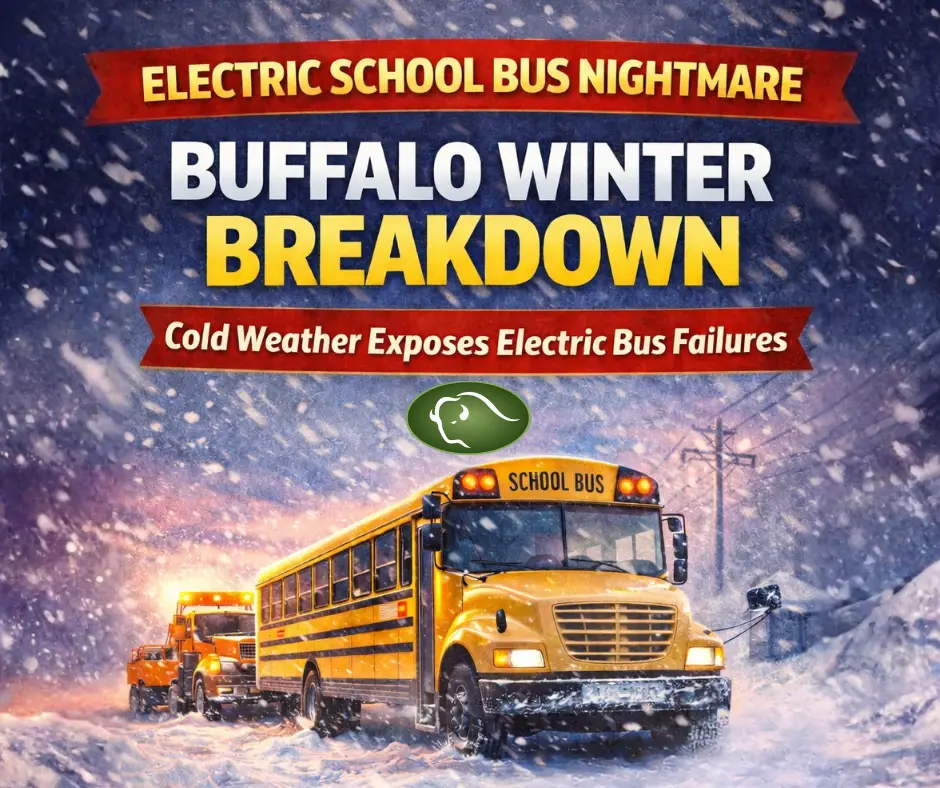
As school districts across New York welcomed electric school buses into their fleets, the reality of Buffalo’s Winter is presenting some unexpected hurdles. What sounded like a great idea to legislators as an alternative to diesel has revealed real operational challenges once temperatures plunge and snow piles up.
Cold Weather Isn’t Kind to Batteries
Electric vehicles, including school buses, generally rely on large battery systems that are most efficient at moderate temperatures. In frigid weather, these batteries must divert significant energy just to keep themselves and the cabin warm. This means there is less energy available for driving, a problem that drivers and families are noticing firsthand.
In the Lake Shore Central School District near Buffalo, parents have raised concerns that some electric buses struggle to maintain cabin heat without draining the batteries that power the bus itself. One local parent reported that children were arriving home cold, saying the buses could not turn on the heat because “it drains the battery.” In at least one instance, a bus even broke down on route and had to be towed, leaving waiting students exposed to freezing temperatures
These challenges aren’t just isolated anecdotes; cold weather affects electric buses broadly. Research shows electric buses can consume significantly more energy in low temperatures, sometimes increasing energy draw by nearly half compared to milder conditions.
Beyond heating struggles, cold weather can significantly reduce battery range. Studies and fleet evaluations have found that electric buses lose a noticeable percentage of their usable range in winter conditions, which can complicate scheduling and require mid-day charging that districts weren’t built around.
Despite these growing pains, many districts (including Lake Shore) and state officials still believe the transition to electric buses brings long-term benefits. But the first real winter test in places like Western New York underscores that electrification must be approached with local conditions in mind, especially where sub-zero temperatures and heavy snow are the norm. Are these buses truly more efficient for the schools?
Find more of us on socials and on our podcast, a new episode every Wednesday.